


Keratoconus: Causes, Symptoms, and Treatment with Dr. Sherif Momtaz Hegazy
Keratoconus is one of the most prominent eye diseases affecting many patients. Many wonder about the available treatment options for keratoconus. With the continuous development of treatment technologies, today we will focus on how to treat this disease at Dr. Sherif Momtaz Hegazy’s Center, highlighting treatment steps and the essential pre- and post-treatment instructions.
Treatment of Keratoconus
Before exploring the treatment methods, it is essential to briefly understand keratoconus to fully grasp the treatment details.
Keratoconus is a condition that weakens the cornea, causing numerous accompanying symptoms. In this condition, the cornea, the highly transparent tissue on the outer surface of the eye, protrudes forward in a cone or three-dimensional triangular shape and becomes noticeably thinner.
This structural distortion affects the cornea’s normal function, preventing light from refracting correctly and leading to multiple visual disturbances.
Global statistics show a rising prevalence of keratoconus, especially in the Middle East, due to various environmental and genetic factors in Arab countries.
Key environmental factors include the widespread occurrence of vernal keratoconjunctivitis in Arab countries and the Mediterranean region, which causes severe itching and may later lead to keratoconus.
Corneal Shape in Keratoconus
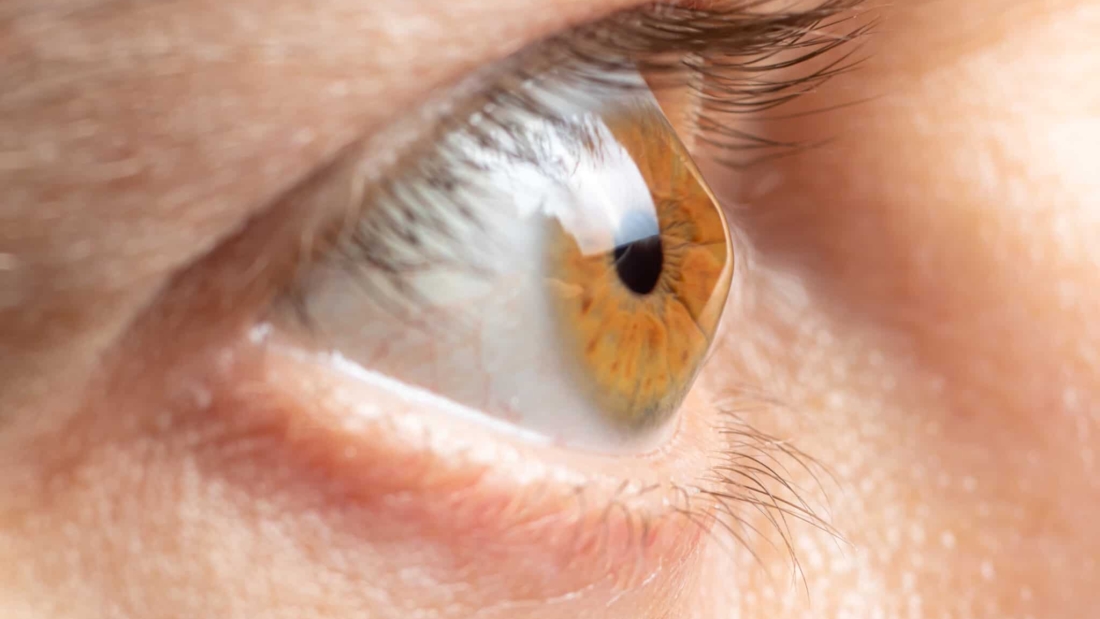
Physiologically, keratoconus is characterized by a structural change in the cornea. Normally, the cornea—the transparent outer layer of the eye—is slightly convex, resembling a dome or half-sphere. This uniform curvature ensures proper light refraction from the outside into the eye.
In keratoconus, the cornea gradually bulges outward, particularly from its center. Patients may sometimes notice the curvature or even the cone-like protrusion with the naked eye.
The normally slightly curved cornea becomes prominent, distorted, and cone-shaped, causing light scattering as it enters the eye, resulting in significant visual distortion.
Causes may include genetic factors or diseases like Down syndrome. Constant eye rubbing and chronic eye conditions such as vernal keratoconjunctivitis or retinitis pigmentosa may also contribute.
Symptoms of Keratoconus
If you notice a change in vision quality along with the following symptoms, it is essential to visit Dr. Sherif Momtaz Hegazy’s Center for diagnosis and treatment:
- Blurred and noticeably decreased vision
- Rapid changes in eyeglass prescriptions
- Night vision problems and difficulty driving
- Halos around light sources
- Light sensitivity
- Chronic headaches
Diagnosis of Keratoconu
Accurate diagnosis is crucial before selecting any treatment method. At Dr. Sherif Momtaz Hegazy’s Center, the main diagnostic techniques include:
- Corneal thickness measurement: Detects thinning compared to a normal cornea.
- Corneal curvature assessment: Measures the degree of corneal protrusion and astigmatism.
- Slit-lamp examination: Uses a microscope with a narrow light beam to evaluate corneal surface, thickness, and clarity.
- OCT imaging: Optical coherence tomography creates cross-sectional images of the cornea to measure thickness and deformation depth.
- Retinal examination: Evaluates light reflection on the retina to detect refractive errors.
- Corneal topography: Non-invasive mapping of corneal surface irregularities.
Stages of Keratoconus
Understanding the stage of keratoconus is essential for choosing the appropriate treatment:
- Early Keratoconus (Stage 1)
- Treated with eyeglasses or traditional contact lenses.
- Corneal protrusion is mild and often appears during adolescence or early adulthood.
- Moderate Keratoconus
- Symptoms become noticeable.
- Treatments include rigid gas-permeable contact lenses, corneal cross-linking (CXL), or corneal ring implantation.
- Severe Keratoconus
- Daily activities become difficult.
- Corneal transplant surgery is required.
Treatment Methods for Keratoconus
Keratoconus can occur at any age, often starting around age 20 and affecting one or both eyes. Early onset usually correlates with faster disease progression. Progress typically stabilizes around age 30.
Rigid Gas-Permeable Contact Lenses
- Provide a smooth surface over the irregular cornea to correct light entry.
- Effective for mild to moderate keratoconus.
Corneal Cross-Linking with Riboflavin (CXL)
- A biochemical procedure using riboflavin (Vitamin B2) drops on the cornea followed by UV light exposure.
- Strengthens collagen fibers, stabilizing the cornea and preventing further thinning or protrusion.
- Particularly effective in young patients to avoid future corneal transplants.
- Most patients experience improved vision within 1-2 months.
Corneal Ring Implants
- Used when glasses or contact lenses are insufficient.
- Femtosecond laser creates precise tunnels in the cornea, followed by insertion of biocompatible plastic rings to reshape the cornea.
- Often combined with cross-linking for optimal results.
Corneal Transplant Surgery
- For advanced keratoconus, either full-thickness (penetrating) or partial-thickness (lamellar) corneal transplantation is performed.
- Full-thickness replaces all layers; partial-thickness replaces only damaged layers while preserving healthy endothelium.
- Potential complications: bleeding, infection, night vision problems, immune rejection, or need for repeat surgery.
Post-Treatment Instructions
Although keratoconus treatments are painless, following post-treatment care is essential:
- Avoid driving initially
- Avoid bright lights due to sensitivity
- Use prescribed eye drops regularly
- Avoid rubbing or touching the eye
- Wear protective glasses during sleep and sunglasses outdoors
- Avoid dusty, smoky, or chemically contaminated environments
- Avoid applying cosmetics near or in the eye
- Avoid strenuous exercise or lifting heavy objects
- Limit screen time and adjust brightness
Risks of Untreated Keratoconus
Untreated keratoconus can progress, causing:
- Increased corneal protrusion
- Scarring or ulceration
- Temporary or permanent vision loss
Early treatment ensures symptom relief and significant vision improvement.
Recommended Age for Treatment
- Children: From age 14
- Young adults: In their 20s
- Most treatment methods are effective from the first session in 95% of cases
Best Cornea Specialist in Egypt
Despite high success rates of treatments, selecting the best cornea specialist ensures precision and safety.
Dr. Sherif Momtaz Hegazy is recognized as the leading cornea and ophthalmology expert in Egypt:
- PhD, Cairo University & Kasr Al-Ainy
- Member & International Examiner, Royal College of Surgeons (UK)
- Advanced fellowship, Tübingen University (Retina & Vitreous)
- Member, International Council of Ophthalmology
- Trainer, Eye Disease Research Institute
- Published numerous research articles in leading international journals
Patients with keratoconus are advised to seek his care for optimal visual outcomes.
Add a Comment