

The eye is one of the most delicate organs in the human body. With its complex structure and sensitive components, it stands as a remarkable sign of the Creator’s magnificence. Due to the intricate overlap of its parts and the diversity of their functions, corneal problems and ocular surface diseases appear commonly. This is no surprise, as the cornea is known to be the outermost layer of the eye that separates the internal eye tissues from the external environment.
In this special article from Dr. Sherif Momtaz Hegazy’s Center, we will introduce you to all types of corneal injuries and ocular surface diseases, along with how to prevent and manage them, as the cornea represents the eye’s primary protective barrier—one that must be fully understood in all its details.
The concept of the cornea and diseases of the eye surface
The content of corneal diseases and ocular surface diseases clearly shares commonalities, given that the cornea is the outer layer of the eye.
The cornea acts as a primary barrier to protect the eye from pollutants and external factors, in addition to absorbing a large portion of the harmful ultraviolet rays on the eye.
Its primary function is to refract the light rays that enter the eye and concentrate them at a single point to reach the retina and complete the vision process.
The curvature of the cornea affects the correct refraction of light rays, and therefore any change in it affects the quality of vision.
The cornea of the eye consists of 5 main layers, including the following:
- The outer epithelial layer: It is a single layer of cells that obtains its nourishment from oxygen and other substances through the outside air and tear fluid.
- The stromal layer: one of the thickest layers of the cornea of the eye, located behind the epithelial layer. It consists of a very high percentage of water and proteins, and is both rigid and flexible.
- The inner lining: also a single layer of cells, located between the stromal layer and the aqueous humor. The aqueous humor is a highly transparent fluid found in the anterior and posterior chambers of the eye. The lining works to pump out excess fluids.
Symptoms of corneal diseases and ocular surface diseases
Before exploring the various corneal problems and ocular surface diseases, we must first understand the symptoms and signs associated with these conditions. This is important because they share many similar indicators, all of which require immediate attention at Dr. Sherif Momtaz Hegazy’s Center if they appear. These symptoms include:
- Blurry, distorted vision.
- Tears flowed profusely.
- Feeling pain in the eye.
- Noticeable redness in the eye.
- Discomfort from the lights.
- Headache.
Diagnosis of corneal problems and ocular surface diseases
In fact, diagnosing and detecting corneal problems and eye surface diseases is not difficult for an experienced ophthalmologist.
At Dr. Sharif Momtaz Hegazi’s center, the condition is diagnosed and the infection is suspected even through very simple tests.
However, an appropriate treatment plan for the patient is only developed after undergoing a series of diagnostic tests and examinations, including:
- The light pen examination is a preliminary examination to check the pupil’s reaction and size, and a dye drop may be placed on the eye to clearly see any damage to the surface of the cornea.
- The visual acuity test measures the patient’s vision quality, using the Selin chart, which displays many numbers, letters, and symbols of different sizes that the patient must learn in conjunction with wearing and constantly replacing lenses.
- Examination of the cornea and conjunctiva using a special lamp that reveals the locations of the injury.
- Measuring eye pressure to rule out glaucoma, which causes high eye pressure and poses a risk to the optic nerve.
- The examination using a slit lamp, which is a microscopic lamp with very bright illumination and high magnification, reveals the nature of the corneal injury and the duration of its effect on other parts of the eye.
- Topographic imaging of the corneal surface to determine the appropriate treatment course in cases of astigmatism and other eye surface diseases.
The most prominent corneal problems and eye surface diseases
Corneal and ocular surface diseases are numerous, encompassing many diverse inflammatory and degenerative conditions, each with its own definition and treatment method that differs from the other. Among the most important diseases affecting the cornea are:
• Corneal inflammation
It is one of the most common corneal and eye surface diseases, where inflammation occurs as a result of bacterial, viral, or fungal infection in the eye.
Any of these pathogenic microorganisms can enter the eye through accidental infection or medical contamination during eye surgery, or even through wearing contact lenses without taking care of their cleanliness, and other causes.
Keratitis causes a range of symptoms, including:
Severe eye pain, vision loss, discharge from the eye.
This condition is treated with eye drops containing antibiotics or antifungals.
Shingles
Shingles occurs as a result of a previous infection with the chickenpox virus. During the initial chickenpox episode, the virus causes a skin rash and systemic symptoms, then disappears, but it remains dormant in other parts of the body. Over time, it can reactivate and travel through the nerves until it reaches the eyes.
Shingles causes blisters and damage to some spots on the cornea of the eye, along with high fever and severe pain.
The risk of developing this disease increases in older adults who have a weakened autoimmune system.
Keratoconus
It is one of the most well-known corneal and eye surface diseases of all time. It is a gradual disease that appears as a morphological change in the cornea of the eye.
This is when the surface of the cornea of the eye protrudes from the center towards the front, becoming cone-shaped.
This change in the curvature of the cornea causes a distortion in the surface of the cornea called astigmatism.
It also leads to many vision problems and vision loss, along with swelling and scarring of the cornea.
Keratoconus may result from genetic factors, direct blows and trauma to the eye, chronic wearing of rigid contact lenses, or even eye diseases such as neonatal retinopathy, Down syndrome, retinitis pigmentosa, Addison’s disease, and other genetic diseases.
Keratoconus requires several possible treatment options, starting with the use of eyeglasses and contact lenses to treat visual changes, or the need to wear special rigid, gas-permeable lenses.
There is a method of keratoconus stabilization with riboflavin that relies on the technique of saturating the corneal layers with a riboflavin solution and then directing ultraviolet rays onto it in order to carry out a chemical reaction to harden the cornea and stimulate the growth of new collagen bonds.
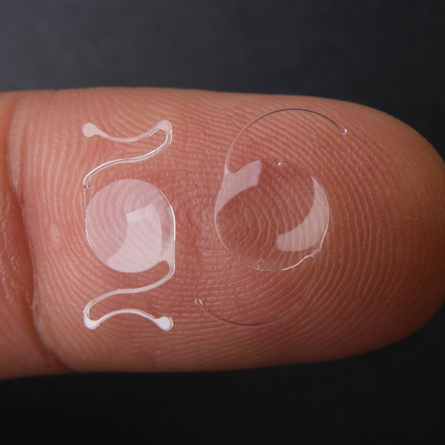
There is also a procedure called corneal ring implantation in which a special laser is used to create very precise tunnel-like structures in the layers of the cornea. Special rings made of bioplastic compatible with eye tissue are then implanted into the tunnels within the cornea to correct the shape and curvature of the cornea to make it more like a natural shape.
However, in cases that do not respond to any of the previous treatments, the focus is on corneal transplantation, which is considered one of the final therapeutic solutions, in which the damaged cornea is permanently removed and replaced with a healthy cornea taken from a recently deceased donor.
Dry eyes
It is one of the most common corneal and eye surface diseases.
In this case, there is a decrease in the natural moisture content on the surface of the eye, and this condition may be temporary or chronic.
It may result from damage to one of the components of the tear film responsible for moisturizing the eye and protecting it from external factors.
Dry eye manifests as eye irritation, itching, and redness, and can be easily treated with moisturizing eye drops or artificial tear drops.
Corneal dystrophy
Corneal dystrophy is defined as a disease of the cornea and the surface of the eye that causes an abnormal multiplication in the number of outer epithelial cells of the cornea.
Corneal dystrophy causes abnormal lines, dots, and prints to be seen in the field of vision.
This disease affects patients from the age of 40 to 70, and it can also appear in children as a result of genetic factors.
Corneal dystrophy does not cause noticeable pain or vision loss at all, but it can cause erosion of the epithelial layer of the cornea. This erosion sometimes reaches the nerves lining the cornea and causes severe pain, in addition to problems with astigmatism and myopia.
· Eye herpes
Ocular herpes refers to a type of corneal problem and inflammatory eye surface disease, specifically viral inflammation of the eye.
This disease can affect the surface of the eye continuously, and is caused by infection with the herpes simplex virus type 1.
This virus causes cold sores, also known as “fever sores,” and may be caused by the herpes simplex virus type 2.
Eye herpes causes ulcers on the surface of the cornea and the spread of inflammation until it reaches the inner layers of the cornea.
There is no proven treatment for viral conjunctivitis, but antiviral eye drops can be used and health instructions followed.
Refractive errors
Refractive errors can be classified as corneal diseases and ocular surface diseases because they are directly related to the condition and degree of curvature of the cornea. These errors include myopia (nearsightedness), hyperopia (farsightedness), and astigmatism. Let’s learn about each of them:
- Nearsightedness, or myopia, is a gradual condition that causes an increase in the concavity of the cornea, thus enabling the patient to see distant objects clearly and making it difficult for him to see close objects.
- Farsightedness, or hyperopia, is an eye condition that causes difficulty seeing near objects clearly, but vision remains ideal and normal for distant objects. Farsightedness is largely related to genetic factors.
- Astigmatism occurs as a result of irregularity in the surface of the cornea and distortion of its external shape, which causes a major problem in focusing the light rays coming into the eye on the retina. It is a common condition that may be associated with nearsightedness or farsightedness and may be hereditary.
How to prevent corneal diseases and eye surface diseases
Corneal diseases and diseases of the eye’s surface can be avoided or minimized by following a set of medical tips and recommendations provided by Dr. Sherif Mumtaz Hegazi, which all followers should adopt to protect their eyes from harm, including:
•Exceptional care for cosmetic and medical contact lenses
They are the primary cause of most corneal injuries and eye surface diseases, and high-quality lenses should be chosen.
The lenses should also be removed before sleeping and placed in their clean solution daily, and hands should be washed and sanitized before touching the lenses to wear them again.
Here, the focus should be on lens solutions; they must be sterile and specifically for contact lenses, and it is essential to replace the lens case every 3 months.
The lens solution remaining in the case should be disposed of and renewed after each use, and contact lenses should be avoided while swimming.
Protecting the eyes from external factors
It is essential to take many measures to maintain eye health even if you do not have any corneal problems or eye surface diseases.
For example, sunglasses should be worn when going out at midday, especially in the summer, to reduce the eye’s exposure to ultraviolet rays from the sun.
Prolonged sitting in front of electronic devices, such as mobile phones, computers, and televisions, should be avoided to prevent eye strain. If this is unavoidable, there are exercises specifically designed to protect the eyes from fatigue.
Regular eye examinations should also be conducted at Dr. Sharif Mumtaz Hijazi’s center to ensure eye health and early detection of any eye injuries in order to deal with them quickly and easily.
Boosting the health of the immune system
As we have seen, the immune system plays a significant role in corneal health and eye surface diseases.
Therefore, everyone should follow a healthy and balanced diet rich in vitamins and elements necessary for eye health.
Foods containing vitamins D, A, and C, as well as omega-3 fatty acids and zinc, should be consumed. Some of the most important foods rich in these elements are:
Fresh fruits and vegetables, especially broccoli, avocados, bell peppers, leafy greens, citrus fruits, as well as tuna, salmon and sardines, nuts, seeds and meats.
And let’s not forget to get enough sleep, at least 7 hours a day, while avoiding smoking and exercising regularly.
Maintaining public health
Although eliminating the causes of infection and inflammation in the eye that result in many corneal and ocular surface diseases is extremely difficult, there are some recommendations that limit it as much as possible.
If the patient has herpes or sores on the skin or in the mouth, he should avoid touching the eyes, eyelids, or the area around the eyes unless he has washed his hands thoroughly with soap and water.
The indiscriminate use of eye drops should be avoided, and they should not be shared with any other patient.
Best cornea doctor in Egypt
All corneal diseases and ocular surface disorders can be treated with high precision and excellent outcomes when handled by an experienced and highly skilled corneal specialist. This is why it is essential to seek care from the best cornea specialist in Egypt — Dr. Sherif Momtaz Hegazy — a distinguished expert in ophthalmology and corneal surgery across the Arab world and internationally.
Dr. Sherif Hegazy has made remarkable medical contributions not only in his home country, Egypt, but also in Germany, the United Kingdom, and many other countries. This came after earning his Master’s degree in Ophthalmology from Cairo University, followed by a PhD in Ophthalmology from Kasr Al-Ainy and Cairo University.
He wrote dozens of scientific papers and medical publications that were published in major journals in Europe and became a trusted reference.
Dr. Sherif also received a fellowship, advanced training, and an international scholarship due to his excellence at the International Council of Ophthalmology (ICO). This qualified him to become a certified and distinguished trainer at the Research Institute of Ophthalmology in Egypt, and later an international examiner for the Membership of the Royal College of Surgeons (MRCS) in the field of ophthalmology. He is the first Egyptian doctor to attain this exceptional global status.
This pertains to the research and academic aspect, but it didn’t stop there; he also worked in dozens of prestigious positions in major international institutions specializing in ophthalmology, most notably:
- Fellowship at the University of Tübingen in Germany.
- Fellowship of the Royal College of Surgeons in the United Kingdom.
- Membership in the International Council of Ophthalmology (I.C.O.)
- Advanced fellowship in retinal and vitreous surgery at the University of Tübingen.
- Fellowship at the Research Institute of Ophthalmology in Egypt.