

Vision Correction and LASIK
Vision correction and LASIK technologies have evolved to become some of the most precise and simplest therapeutic procedures in the field of ophthalmology. Today, patients can undergo a vision correction procedure, leave the medical center or hospital the same day, and resume their daily activities the following day. In this context, Dr. Sherif Momtaz Hegazy Eye Center presents a comprehensive guide explaining all the details of these procedures.
Definition of Vision Correction and LASIK Procedures
These procedures are highly accurate refractive surgeries widely performed around the world. They depend on laser beams directed at the cornea to reshape it.
The cornea is the transparent layer at the front of the eye. Its primary role is to refract light rays to help them pass toward the retina—the structure responsible for vision.
LASIK technology treats corneal problems, lens issues, and refractive errors such as:
Nearsightedness (Myopia)
The image focuses in front of the retina, allowing the patient to see nearby objects clearly but making distant objects blurry.
Farsightedness (Hyperopia)
Light rays reach the retina before meeting at a single point, meaning the focal point lies behind the retina. The patient sees distant objects clearly but struggles to see near objects.
Astigmatism
The corneal surface is irregular, preventing light rays from bending properly toward the retina. The patient suffers from blurred vision at all distances.
Pre-LASIK Preparations
A patient is not referred for vision correction or LASIK unless their condition truly requires it.
Several precise tests are performed before the procedure, including:
- Comprehensive eye examination evaluating vision sharpness, eye health, and retinal condition.
- Excluding eye diseases such as glaucoma, cataracts, retinal disorders, or corneal problems.
- Accurate measurement of myopia, hyperopia, or astigmatism and monitoring changes.
- Corneal topography using Pentacam imaging to assess the front and back surfaces of the cornea, detect abnormalities, and rule out keratoconus.
- Measuring corneal thickness to determine the safest corrective technique.
- Wavefront analysis (eye fingerprint) to detect visual aberrations and plan custom LASIK if needed.
Types of Vision Correction and LASIK Surgeries
Since these surgeries have become extremely common, it is important to understand their types. At Dr. Sherif Momtaz Hegazy Eye Center, the main techniques include:
1. LASIK
A flap is created in the outer corneal layer using a laser or microkeratome. Laser beams are then used to reshape the cornea before repositioning the flap.
- Recovery within 24 hours
- Vision stabilizes in a few days
- Safe, effective, fast results, and relatively low cost
- Temporary symptoms: mild discomfort, blurred vision, temporary dry eyes
2. Surface Laser (PRK)
A very thin layer of the corneal surface is removed instead of creating a flap. The cornea is reshaped with a laser, and a protective contact lens is placed to support healing.
- Pain lasts 2–3 days
- Vision improves within several days
3. Femto-SMILE
A modern technique using a femtosecond laser to create a lenticule (a thin disc of corneal tissue) removed through a very small incision. The remaining cornea is reshaped.
- Quick recovery
- Suitable for thin corneas
- Excellent results especially for myopia
- Not ideal for severe hyperopia or astigmatism
- May cause temporary dry eyes
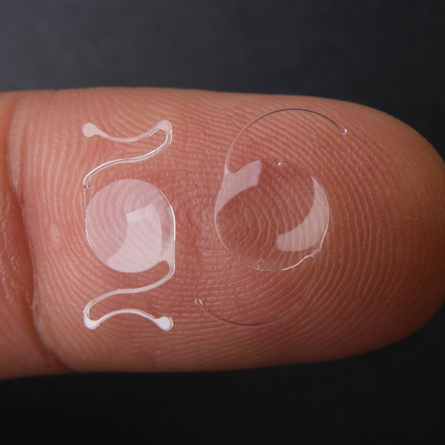
4. Intraocular Lens (IOL) Implantation
One of the most advanced procedures for correcting vision:
- An artificial lens made of biocompatible material is implanted inside the eye.
- Suitable for severe refractive errors that laser cannot treat.
- Can be placed in front of or behind the iris (e.g., EVO ICL lenses).
- In some cases, the natural lens is removed and replaced with an artificial one—similar to cataract surgery.
Recovery is generally fast compared to other procedures.
Post-LASIK Care Instructions
Instructions vary based on the procedure type, age, and patient factors, but common guidelines include:
- Avoid rubbing or touching the eyes for at least two weeks.
- Use prescribed eye drops to prevent infection and dryness.
- Avoid direct sunlight; wear sunglasses when going outdoors.
- Avoid swimming or splashing water directly into the eyes.
- Do not use makeup or skin creams around the eyes.
- Avoid strenuous exercise for several weeks.
- Limit screen time and reading during the first days.
- You may eat normally but avoid straining, vomiting, or constipation.
- Expect normal temporary symptoms: burning, tearing, blurred vision for ~6 hours.
- Do not drive on the day of surgery.
Common Side Effects After LASIK
Serious complications are rare, but common side effects include:
- Dry eyes—the most common side effect, lasts months but improves with artificial tears.
- Vision disturbances such as halos, glare, night-vision problems.
- Residual astigmatism requiring glasses or enhancement surgery.
- Infections (rare), treated with antibiotic drops.
- Under-correction especially in myopic patients—may need enhancement after one year.
- Over-correction, more difficult to treat.
- Flap complications such as displacement (rare).
- Corneal issues like ectasia or irregular healing beneath the flap.
Eligibility for LASIK
A patient must meet specific criteria:
- Age between 18–45 years
- Good general health without uncontrolled diabetes or autoimmune diseases
- No permanent eye diseases like glaucoma or keratoconus
- Stable refractive error for at least one year
- Corneal thickness above 500 microns for LASIK (thinner corneas may need PRK or SMILE)
Patients Not Eligible for LASIK
LASIK is not suitable for:
- Unstable or changing refractive errors
- Severe myopia, hyperopia, or astigmatism
- Severe dry eye
- Very thin corneas
- Keratoconus
- Glaucoma or high intraocular pressure
- Cataracts
- Recurrent eye infections
- Uncontrolled diabetes
- Pregnancy or breastfeeding
LASIK Success Rate
Vision-correction surgeries have extremely high success rates.
- Average success rate: 99%
- Clear improvement in life quality
- Minimal risks when performed by expert surgeons
Best Ophthalmologist in Egypt
In refractive surgery, the surgeon deals with the most delicate structures of the eye, requiring precision and deep expertise. For years, Dr. Sherif Momtaz Hegazy has been recognized as one of the top ophthalmologists in Egypt.
He has served in major national and international institutions such as:
- The Royal College of Ophthalmologists (UK)
- The Research Institute of Ophthalmology (Egypt)
- Tübingen University (Germany)
- The International Council of Ophthalmology
He has also published numerous scientific papers, spoken in global conferences, and established his esteemed eye center in Egypt, providing high-quality medical care to thousands of patients every year.