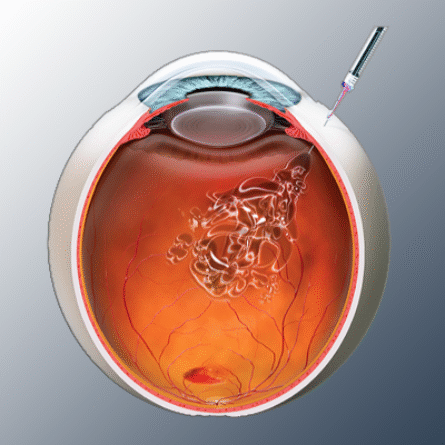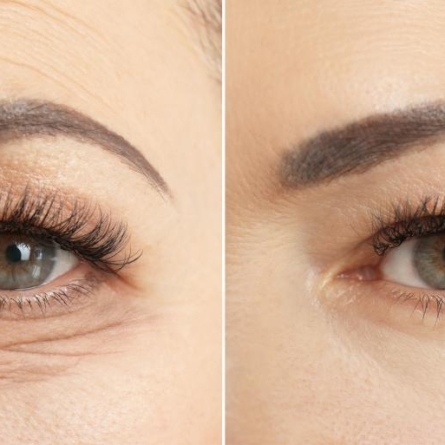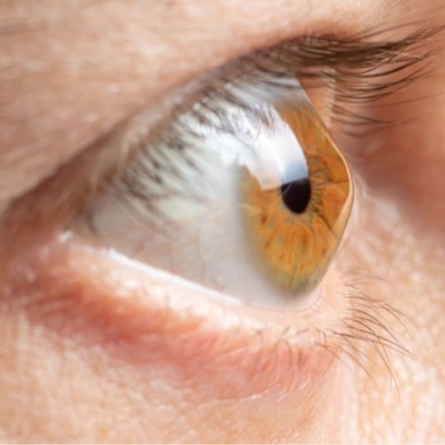


Cataract surgery has advanced significantly in recent years, now performed using the latest technologies and devices such as laser and ultrasound with the phaco machine, after previously being done through traditional methods that relied solely on a surgical scalpel. With this pivotal medical development in the field of ophthalmology, understanding these procedures and their details has become an essential necessity—not merely an option—for every cataract patient, in order to receive proper awareness and guidance from Dr. Sherif Momtaz Hegazy’s Eye Center about this condition and its treatment methods.
Definition of cataract disease
Cataracts are defined as a health condition in which proteins accumulate in the eye lens as a result of aging or other causes.
This accumulation of proteins is accompanied by the formation of a collection of cataracts in the lens, causing the loss of the eye’s natural lens transparency, high blurriness in vision, and significant distortion, making cataract surgery necessary.
Cataracts may result from aging, diabetes, direct exposure to external trauma to the eye, or even chronic use of steroid medications.
Symptoms of cataracts
When a patient notices a set of symptoms and clinical signs that indicate the presence of cataracts, they must immediately visit Dr. Sherif Momtaz Hegazy’s center, where a variety of examinations and diagnostic tests are performed to confirm whether the patient requires cataract surgery. Among the most common symptoms that appear in patients with cataracts during the moderate and advanced stages are:
- Blurred and distorted vision, as if the patient were looking out of a window where vapors were gathering.
- Night vision problems.
- Light sensitivity and discomfort from bright light.
- Seeing halos around light sources.
- Lack of clarity of reading.
- The need to replace eyeglasses periodically.
Cataract surgeries
There is a wide range of cataract treatment protocols and surgeries available at Dr. Sherif Mumtaz Hegazy’s center, and the most suitable surgery is chosen according to the patient’s condition and the degree of their cataract. These surgeries include:
Cataract treatment using phacoemulsification or ultrasound
Phacoemulsification is an advanced cataract surgery that relies on the principle of ultrasonic cataract removal.
Very high frequencies of ultrasound waves are used to remove cataracts, as follows:
- Local anesthesia of the eye using anesthetic drops or sedative injections that reduce eye movement.
- A very precise surgical incision was made using a specialized laser.
- Inserting a phacoemulsification probe, which emits very high-frequency ultrasound waves, into the lens capsule where the cataract is located.
- Operating the phacoemulsification machine and emitting ultrasound waves directly towards the cataract site to break up the lens affected by cataracts into very fine particles.
- Modifying the mechanism of action of the phacoemulsification device and converting it to a suction or lens emulsification path to extract all the particles resulting from the fragmentation of cataracts in the lens capsule.
- Cleaning the lens capsule after completely removing the cataract particles from it and washing it from the inside with a saline solution designed to get rid of all the remnants of the cataract.
- Implanting a healthy, transparent, high-definition lens made of biocompatible plastic in place of the original lens to fully clarify vision.
·Smart cataract lens implantation
Smart lenses that treat cataracts have recently emerged and become widely known in the world of ophthalmology and ophthalmic surgery.
The smart lens is implanted in place of the original eye lens, as in other surgeries.
These lenses enhance vision clarity at all distances, completely eliminating the need for eyeglasses.
This surgery may be combined with an eye pressure adjustment procedure that modifies or widens the tear drainage angle in the eye in order to reduce its pressure, and the MIGS technique may also be used.
Laser treatment for cataracts
Laser surgery is one of the most important cataract surgeries performed under local anesthesia in no more than 5 minutes.
In this surgery, the lens affected by cataracts and cloudiness is replaced with a clear, high-definition lens.
Laser cataract surgery is often resorted to when vision deteriorates to the point of affecting daily tasks. If treatment is neglected at this stage, it may worsen and cause increased eye pressure, glaucoma resulting from the cataract, or degeneration of the circular ligament responsible for holding the lens in its correct position.
In laser treatment for cataracts, we rely on the femtosecond laser, the most famous of all, through these steps:
- Eye anesthesia is performed using the usual method: simple local anesthesia.
- Making very small incisions or openings, no more than millimeters in size, in the cornea of the eye to remove the cataracts.
- Implanting a healthy lens after completely removing the lens affected by cataracts.
- استخدام الفيمتو ليزر أيضاً في تصحيح الاستجماتيزم في حال كان المريض مصاباً به مع الساد.
Traditional cataract surgery
It is one of the oldest and actually most dangerous cataract surgeries.
Recovery after this surgery requires a very long period of time and may increase the likelihood of developing astigmatism after surgery.
However, it is also an economical option with a lower cost compared to phacoemulsification or laser technology, and it may be the only and final option if the cataract is very hardened and impossible to break up.
- Local or general anesthesia is administered to the patient several minutes before surgery.
- A relatively large surgical incision was made using a surgical scalpel or a microkeratome.
- Removal of hardened cataracts as a single mass or large parts of the lens.
- Implanting the new lens in the correct position.
- Medical stitches were used to completely close the wound and bandage the eye.
Alternatives to cataract surgery
Often, surgical solutions are too complex and dangerous in the patient’s view, and therefore cataract surgery is ruled out.
But in reality, the surgeries and treatment procedures mentioned above are the definitive and guaranteed solutions for this disease.
Ultimately, treatment options vary depending on the patient’s condition, the progression of their illness, and their overall health.
However, drug therapy remains the first line of treatment and the most suitable alternative if cataract surgery is ruled out.
Medications can control eye pressure and treat the eye as much as possible, but they cannot control intermediate and advanced stages of cataracts.
Dr. Sherif Mumtaz Hegazy also recommends that his patients with early-stage cataracts wear eyeglasses at all times, as new lenses are designed specifically for them with carefully considered dimensions that temporarily improve vision and may eliminate the need for surgery in some cases.
In addition, recent news has spread about the success of clinical trials that used stem cells to treat cataracts by generating new cells in the eye capable of restoring its normal condition and stimulating the growth of a new, healthy, cataract-free lens. Despite the widespread discussion surrounding these studies, they have not yet received approval from the U.S. Food and Drug Administration. If they prove successful in the coming years, they will be considered one of the revolutionary innovations in the field of ophthalmology and eye surgery for generations to come.
Types of cataract lenses
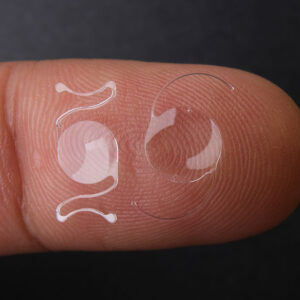
In most cataract surgeries, there is a standardized and consistent treatment protocol. This protocol involves removing the cataract-affected lens and replacing it with a healthy artificial lens. Among the most important and modern types of lenses used in cataract surgery are:
Monofocal lenses
It is one of the best types of lenses used in many cataract surgeries, and many corrective lenses also fall under it.
These lenses correct vision at a single distance, which may be near, far, or intermediate, depending on the refractive problem the patient is experiencing in conjunction with their cataract.
ومن أفضل العدسات أحادية البؤرة هي العدسات الكروية التي تعمل على إصلاح مشاكل الرؤية بدقة عالية مع تصحيح عيوب الرؤية الليلية وتحسين تباين الألوان والرؤية ثلاثية الأبعاد.
·العدسات متعددة البؤرة
Unlike Monofocal lenses, multifocal lenses correct vision at both near and far distances simultaneously.
It is one of the newest types of lenses used in cataract surgeries that have emerged in recent years.
These lenses ensure that the patient can do without eyeglasses for reading and daily tasks, and the best types are American multifocal lenses.
Toric lenses
Refractive toric lenses are the number 1 choice when a cataract patient also has astigmatism.
These lenses help to correct the regularity of the corneal surface of the eye and thus treat astigmatism with high quality.
The following symptoms of cataract surgery
Cataract surgery is accompanied by a range of symptoms and side effects that are very normal and there is no need to worry about them.
These symptoms appear in almost all patients and disappear spontaneously several hours after surgery.
The most important point is for the patient to be aware of these symptoms so that he does not think they are reasons for the failure of the surgery and therefore worry about them. Among the most important of these symptoms are:
- Mild to moderate redness of the eye.
- Extreme discomfort when looking at light.
- Dry eyes or excessive tear production.
- The sensation of having a foreign object or grains of sand in the eye.
- Blurred or distorted vision.
- Blurred and unstable vision.
- Swelling of the eyelids.
All of these symptoms are normal and not cause for concern, as mentioned above. However, there are some other symptoms that require consultation with a doctor, including:
- Experiencing severe and unbearable eye pain that does not go away with painkillers.
- Excessive tear production from the eye.
- Bloody redness in the eye.
- Yellowish discharge coming from the corner of the eye.
- Severe swelling of the eyelids.
- Seeing blood clots in the whites of the eyes.
- The vision has deteriorated further compared to before the surgery.
Key guidelines after cataract surgery
There is a common factor among all cataract surgeries regarding how to care for and look after the cataract operation.
This is because the success of the surgery and its final outcomes do not depend solely on medical and surgical expertise during the procedure; postoperative eye care plays an even greater role in determining the final results. In light of this, Dr. Sherif Momtaz Hegazy provides a set of medical guidelines and instructions that patients must follow during the recovery period, the most important of which are:
- Apply the eye drops prescribed by the doctor at the specified dose and time, without increasing or decreasing the dosage.
- Avoid carrying heavy objects or doing physically strenuous work.
- Control severe coughing fits and sneezing as much as possible because they put pressure on the eyes.
- Do not wash your face and eyes specifically with water, and just wipe the area around your eyes with a wet cotton ball.
- Returning to normal tasks the day after the operation is possible, provided that the eyes are not strained and good hours of sleep are enjoyed.
- Avoid rubbing your eyes or applying cosmetics to them.
- Limit driving or working long hours during the first few days after surgery.
- Use sunglasses during the day and eye protection at night during sleeping hours.
How long does it take to recover after cataract surgery?
The recovery period after cataract surgery varies depending on the type of surgery, the extent of its penetration into the eye, the patient’s age, health condition, and eye care.
In most cases, vision begins to improve several hours after surgery, but the first few hours after the operation may be the most difficult in terms of potential pain, blurred or unclear vision, and general weakness.
As for full recovery, it may take 4 to 6 weeks after surgery, during which time vision will continue to be disturbed.
The patient may also experience blurred vision for several weeks, which is a normal condition resulting from the brain not yet having adapted to the newly implanted lens. However, if the blurriness persists for a very long time, it may be related to the possibility of an eye infection, severe dryness, or posterior capsule opacification, which requires laser capsulotomy—a simple procedure that Dr. Sherif Momtaz Hegazy performs easily in his clinic within a few minutes.
Vision stabilizes completely and permanently 3 months after surgery, with emphasis on following all post-operative health instructions.
Best cataract doctor in Egypt
Cataract surgeries record their highest success rates in the Arab world in the Arab Republic of Egypt, where we see an elite group of distinguished ophthalmologists and surgeons with decades of experience.
One of the most prominent and brilliant ophthalmologists in Egypt is Dr. Sherif Mumtaz Hegazi, who has specialized in ophthalmology and eye surgery at Al-Qasr Al-Aini University and Cairo University in Egypt for many years.
Dr. Sherif excelled in the academic field with remarkable professional milestones. Thousands of students from all over the world benefited from his knowledge. He taught courses in ophthalmology and retinal surgery at the Institute of Ophthalmology Research in Egypt, and trained thousands of students as he was a certified fellow at the Institute of Ophthalmology Research as well.
He also joined the most prestigious organizations, associations, and leading medical institutions in the field of ophthalmology worldwide, most notably:
University of Tübingen, Germany; the World Council of Ophthalmology in Glasgow, UK; the Royal College of Surgeons in Ophthalmology in the UK; and many others.
As a result of his excellence everywhere and his firm mark in the world of ophthalmology at the international level, Dr. Sharif qualified to receive an international grant and an advanced fellowship in retinal and vitreous surgeries in Germany.
List of achievements
The list of achievements did not stop there, as Dr. Sharif excelled in his international lectures, which attracted thousands of fellow Arab and foreign ophthalmologists at the most powerful international medical conferences and seminars.
He published dozens of research papers and scientific articles in the field of ophthalmology in specialized scientific journals in this field, which established his words as a reference for every distinguished ophthalmologist.
At Dr. Sherif Momtaz Hegazy’s Center, cataract surgeries are not the only specialty; dozens of advanced medical and surgical services in the field of ophthalmology are also provided. These services aim to restore clear vision and natural sight to every patient, with the highest levels of professional integrity and comprehensive therapeutic reliability. Every patient is considered part of the Dr. Sherif Momtaz Hegazy Center family, and restoring their healthy vision is a responsibility carried by the entire medical team, who work with the utmost readiness and dedication. This is the true secret behind the center’s success, excellence, and outstanding outcomes—because our patients’ vision is our top priority.